Abstract
Introduction The mean age of autism spectrum disorder (ASD) diagnosis varies globally and the factors affecting it are inconsistent across populations and studies.
Aim Quantitative research was undertaken to investigate the age ASD was diagnosed and some possibly related factors, in a sample from Macedonia.
Methods A web-based survey was conducted among 103 parents of 103 individuals with ASD, from December 2021 to May 2022. Socio-demographic characteristics of parents/families and demographic and medical characteristics of individuals with ASD were reported through an anonymous questionnaire. Descriptive statistics and non-parametric inferential statistical tests were used to analyse data.
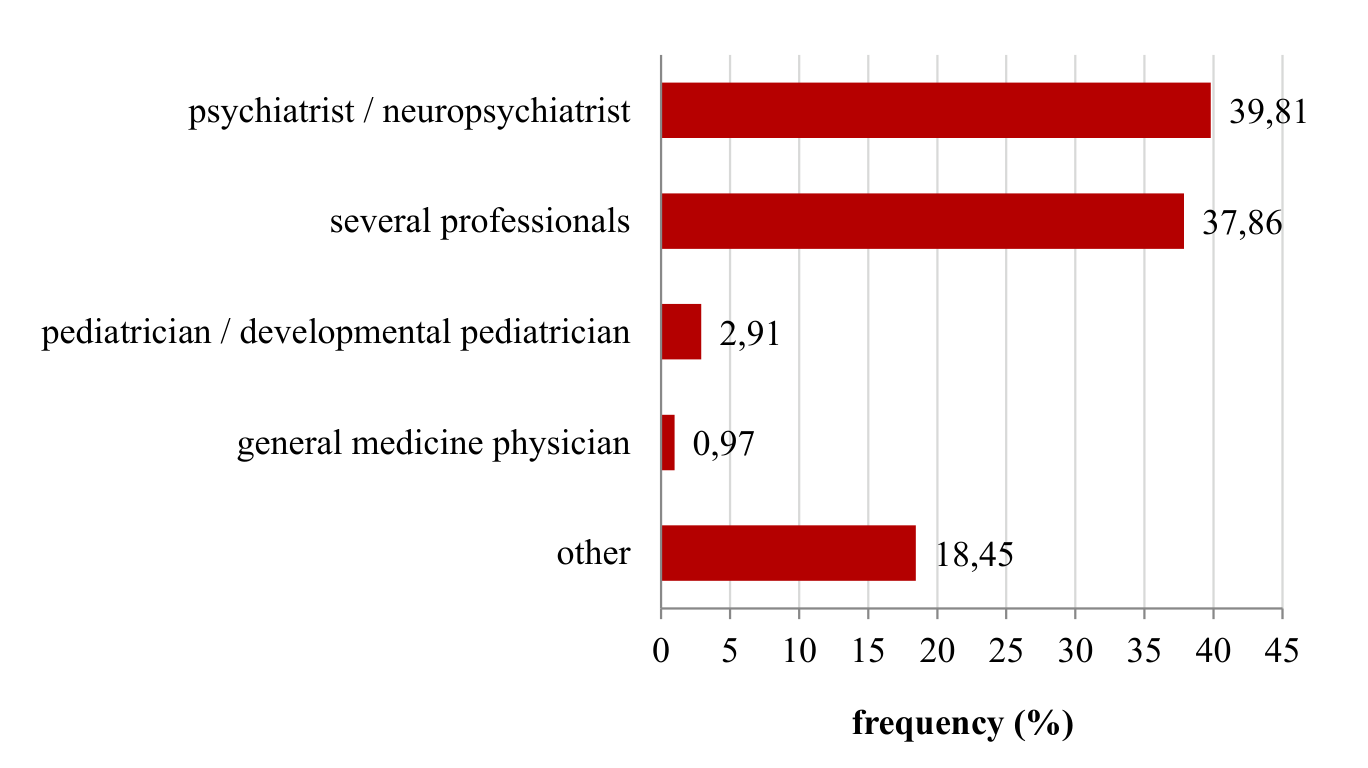
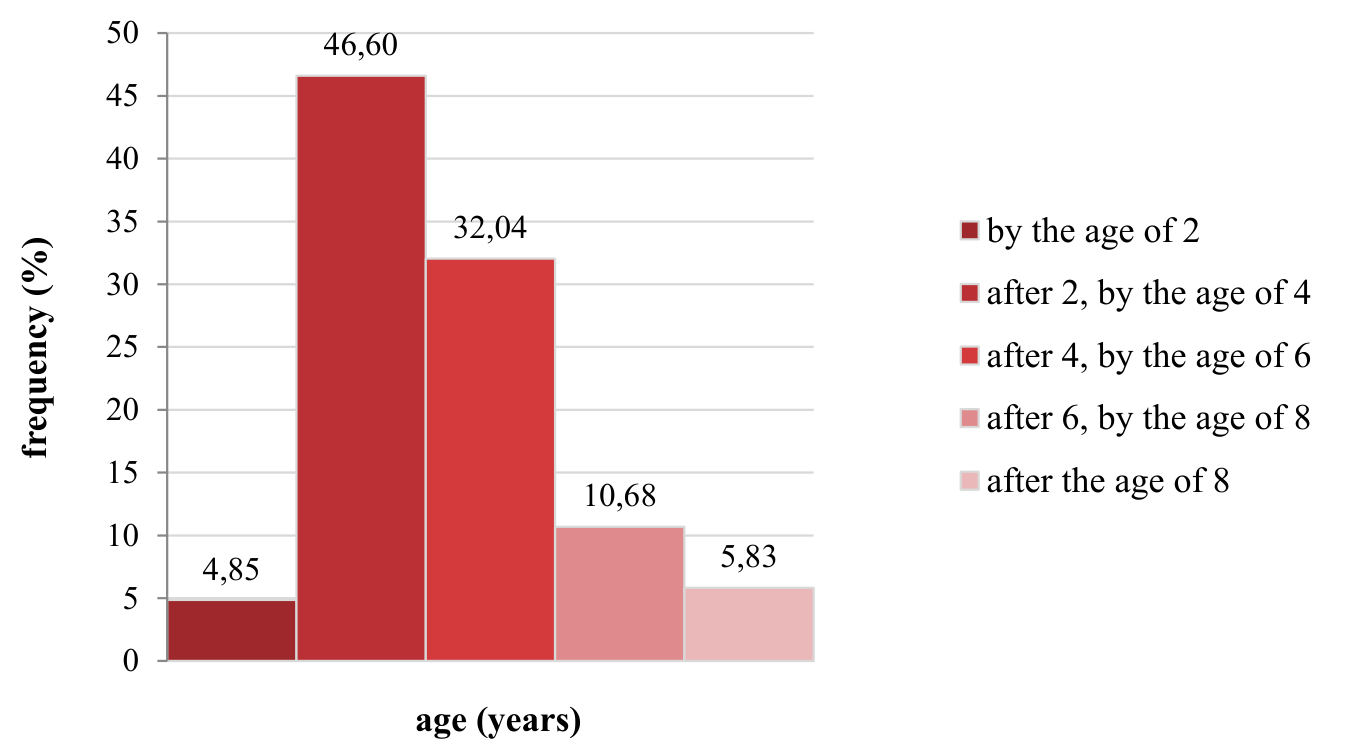
Results The median age of the ASD sample was 10 years and most individuals (47.57%) had moderately severe ASD. In 39.81% ASD was diagnosed by a psychiatrist/neuropsychiatrist, in 37.86% by several professionals, while paediatricians/developmental paediatricians were the source of diagnosis in only 2.91%. Over half of the individuals with ASD (51.46%) received the diagnosis before the age of 4, while around 17% received the diagnosis after the age of 6. The level of education of the parents, family living location, gender, current age and severity of ASD were not found to be associated with the age of diagnosis.
Conclusion Nearly 1/5 of the sample was diagnosed comparatively late ‒ at school age. However, characteristics pertaining to parents/families and to individuals with ASD, did not significantly affect the age of diagnosis. Possible influence of other, external factors (e.g., awareness and vigilance among professionals, availability of early screening programs) is acknowledged and will be included in further research.
Keywords: autism spectrum disorder, diagnosis, age, severity, parents
Citation: Stojanovska, I. (2023). Age of Autism Spectrum Disorder Diagnosis and Associated Factors. Journal of Health and Rehabilitation Sciences, 2023 June 11; 2(1):60–72. https://doi.org/10.33700/jhrs.2.1.66
1. Introduction
It is generally believed that the earlier autism spectrum disorder (ASD) is diagnosed, and, by extension, earlier intervention introduced, the better the outcomes for children with ASD. Admittedly, there is evidence to both support and refute this association.
The idea that “earlier is better” when it comes to intervention, is supported by a number of compelling interconnected arguments. Firstly, the 0-3 years-of-age period is regarded as the peak neuroplasticity phase, further elaborated by the notion of critical or sensitive periods, during which the brain is primed for specific areas of learning. Then, the idea of a developmental cascade follows, where disturbances of one phase of development significantly impede the successful acquisition of those following. Ensuing this evidence and theory, there seems to be a strong justification for intervening at the earliest possible time, ideally during the critical periods of development or when initial symptoms emerge (Towle et al., 2020). Furthermore, several studies (e.g., Clark et al., 2018; Dawson et al., 2010; Estes et al., 2015; Gabbay-Dizdar et al., 2022; Remington et al., 2007) have reported results in favor of the effectiveness of early ASD intervention. On the other hand, the findings of other studies (e.g., the Cochrane review by Reichow et al. (2018) are not that convincing.
These disparities are reflected in the current positions of two leading US authorities: the US Preventive Services Task Force (USPSTF) and the American Academy of Pediatrics (AAP). In 2016, after reviewing the evidence to assess the balance of benefits and harms of screening for ASD in children aged 18 to 30 months for whom no concerns of ASD have been raised by their parents or a clinician, the USPSTF concluded that “evidence is lacking, of poor quality, or conflicting, and the balance of benefits and harms cannot be determined” – no recommendation can be made (Siu, 2016, p.692). On the other hand, firstly in 2007, and then confirmed in 2020, the AAP recommended “screening all children for symptoms of ASD at 18 and 24 months of age, because children with ASD can be identified as toddlers, and early intervention can and does influence outcomes” (Hyman et al., 2020, p.7; Johnson & Myers, 2007; Zwaigenbaum et al., 2015).
The diagnostic process, however, is not easy and smooth. The so-called “diagnostic odyssey” is usually lengthy, confusing and wearying for the family. It engages multiple individuals (parents, children, pediatricians, other specialists, therapists, educators) and factors (social and medical systems, family dynamics, and knowledge of the subject) (Hanley et al., 2021; Lappe et al., 2018).
Literature data on the diagnostic process that individuals with autism and their families face, the challenges along that path, originates mainly from research conducted in developed, high-income countries. There is a noticeable paucity of research data from low- and middle-income countries.
The age of ASD diagnosis corresponded to the start of formal schooling in the study of six Latin American and Caribbean countries, despite a much earlier age of first noticed developmental concern, highlighting the need to close this age gap and increase children's chances of benefiting from early intervention (Montiel-Nava et al., 2023). A multi-center study conducted in China also identified issues with missed and delayed ASD diagnoses and consequent delayed interventions (Long e al., 2022). Late ASD diagnosis was reported in the underprivileged areas in other Asian countries, e.g., Azerbaijan and India (Ghahari et al., 2022; Prahbhjot & Singhi, 2022). Samadi et al. (2022) finds pervasive challenges in the ASD health care system in Iraq – at personal, professional, and organisational levels. Nonetheless, studies from some European countries also point to similar difficulties (Bujas Petkovic et al., 2015; Ilic et al., 2019; Pistoljevic, Dzanko & Ghaziuddin, 2021).
In general, low- and middle-income countries struggle to diagnose and support children who are experiencing developmental difficulties, due to the lack of experienced personnel across all disciplines and poverty of resources to improve services (McConkey, 2022). Macedonia, a middle-income country (World Bank, 2023) in Southeastern Europe, faces deficient standardised protocols for early detection, diagnosis, and assessment (Trajkovski, 2017). Therefore, taking into consideration (literature) evidence from other countries, research was undertaken to investigate the average age when ASD is diagnosed in Macedonia and the professionals involved in the process. Additionally, based on indices from earlier literature data and in line with the planned methodology (parental survey), five factors were selected to be tested for possible influence on the age of diagnosis. We hypothesised that the age of ASD diagnosis might be significantly affected by the following characteristics pertaining to:
the individuals with ASD (demographic and medical characteristics: current age, gender, severity of ASD),
the parents and families (socio-demographic characteristics: parental level of education, living location of the family).
Thus, the aim of the study was to address this under-researched topic in the region and provide preliminary knowledge to guide future research and policies leading to advances in autism diagnosis.
2. Methods
Eligible to participate in the research were parents of individuals diagnosed with ASD, Macedonian residents. The inclusion criteria accepted both parents of children and of adults diagnosed with ASD, and cooccurring neurodevelopmental or other conditions were also not an exclusion criterion. Parents stated their experiences and opinions through a questionnaire in a web-based survey. One-hundred and three (n=103) of the respondents and their children with ASD (n=103) were included in the final sample after eliminating two respondents due to insufficient or unclear responses. The ASD diagnosis was parent-reported and no diagnosis verification documents were required due to the anonymous character of the survey.
A quantitative research study was conducted using a parental survey based on an online available questionnaire, developed following a comprehensive literature search and selection of relevant topics. The questionnaire's opening section informed potential participants about the survey's purpose, anonymous nature, and data collection. Ethical approval was not required since no unique identifiable patient data was collected, but still the utmost protection of confidentiality was ensured.
The questionnaire consisted of 42 questions divided into six sections, as it surveyed not only the age of ASD diagnosis but also the treatments received. Thus, section I included basic demographic data related to the participating parents and family, section II, data pertaining to the child/individual with ASD and the diagnosis, sections III-V, the treatments received (pharmacological, biomedical and special diets, respectively) and section VI included only one (open) question for additional parental remarks. Due to the rather large amount of generated and analysed data, this article focuses on the results related to the age of ASD diagnosis only. A Google Form file containing the questionnaire was generated. The web-link to the questionnaire was distributed through social media profiles of several parental support groups and associations of parents of children/individuals with autism or developmental disabilities. Researchers’ personal contacts with parents of individuals with ASD were also used to share the web-link. The questionnaire was available for prospective participants for 6 months (from December 2021 to May 2022), either online – through the Internet or as a paper copy (the latter not requested by any of the parents).
Descriptive statistics were used to characterise the sample, the age of diagnosis and the professionals involved. Taking into account the categorical data and the non-normal distribution (Kolmogorov-Smirnov test, p<0.001), non-parametric tests were employed for the inferential statistical analysis – the Mann-Whitney U test and the Kruskal-Wallis test were used to find out whether any or some of the 5 factors (variables) affect the age when ASD is diagnosed. A difference/association was considered statistically significant if p<0.05. The statistical analysis was conducted using the IBM SPSS Ver. 28.0.1.1(15) program.
3. Results
The sample of parents involved mainly mothers (over 90%), the majority aged 30-49 years and holding a university degree. Most of the families live in urban areas. Conversely to the parental sample, over 80% of the individuals with ASD were male, with a male to female ratio of 4.7:1. This sample was of a fairly young age, although adolescents and adults with ASD were also included (Table 1).
Table 1. Socio-demographic characteristics of parents and families and demographic and medical characteristics of the children with ASD
| Parents and families (n=103) | n | % |
|---|---|---|
| Gender of the parent | ||
| male | 9 | 8.7 |
| female | 94 | 91.3 |
| Age of the parent (years) | ||
| up to 20 | 1 | 1.0 |
| 20 to 29 | 2 | 1.9 |
| 30 to 39 | 42 | 40.8 |
| 40 to 49 | 49 | 47.6 |
| 50 to 59 | 7 | 6.8 |
| 60 to 69 | 2 | 1.9 |
| Educational level of the parent | ||
| less than high school | 5 | 4.9 |
| high school | 33 | 32.0 |
| university degree | 65 | 63.1 |
| Living location of the family | ||
| rural | 12 | 11.7 |
| suburban | 13 | 12.6 |
| urban | 78 | 75.7 |
| Children with ASD (n=103) | n | % |
|---|---|---|
| Gender | ||
| male | 85 | 82.5 |
| female | 18 | 17.5 |
| Age (years) (X̄=11.6, s=6.22; M=10) | ||
| 3 to 5 | 11 | 10.7 |
| 6 to 8 | 35 | 34.0 |
| 9 to 11 | 11 | 10.7 |
| 12 to 14 | 15 | 14.6 |
| 15 to 17 | 16 | 15.5 |
| 18 to 20 | 9 | 8.7 |
| above 20 | 6 | 5.8 |
| Severity of ASD | ||
| mild | 38 | 36.9 |
| moderate | 49 | 47.6 |
| severe | 16 | 15.5 |
| Age of diagnosis (years) | ||
| by the age of 2 | 5 | 4.9 |
| after 2, by the age of 4 | 48 | 46.6 |
| after 4, by the age of 6 | 33 | 32.0 |
| after 6, by the age of 8 | 11 | 10.7 |
| after the age of 8 | 6 | 5.8 |
3.1 Professionals diagnosing ASD
As seen from Figure 1, diagnosis of ASD was mainly given either by psychiatrists/neuropsychiatrists or by more than one professional. Lesser was the involvement of other professionals.
3.2 Age of ASD diagnosis
Just over one half of individuals with ASD were diagnosed by the age of 4; however,
17% were diagnosed after the age of 6 (at school age) (Figure 2).
3.3 Factors affecting the age of ASD diagnosis
Five factors (variables) were tested to determine whether they affect the age when ASD is diagnosed. Variables concerning the individual with ASD were: their gender, current age and severity of ASD, and those pertaining to the parents and families were: the level of parental education and the living location of the family. For this purpose, participants were divided into 5 groups (categories) according to their age at ASD diagnosis (Table 1).
Current age
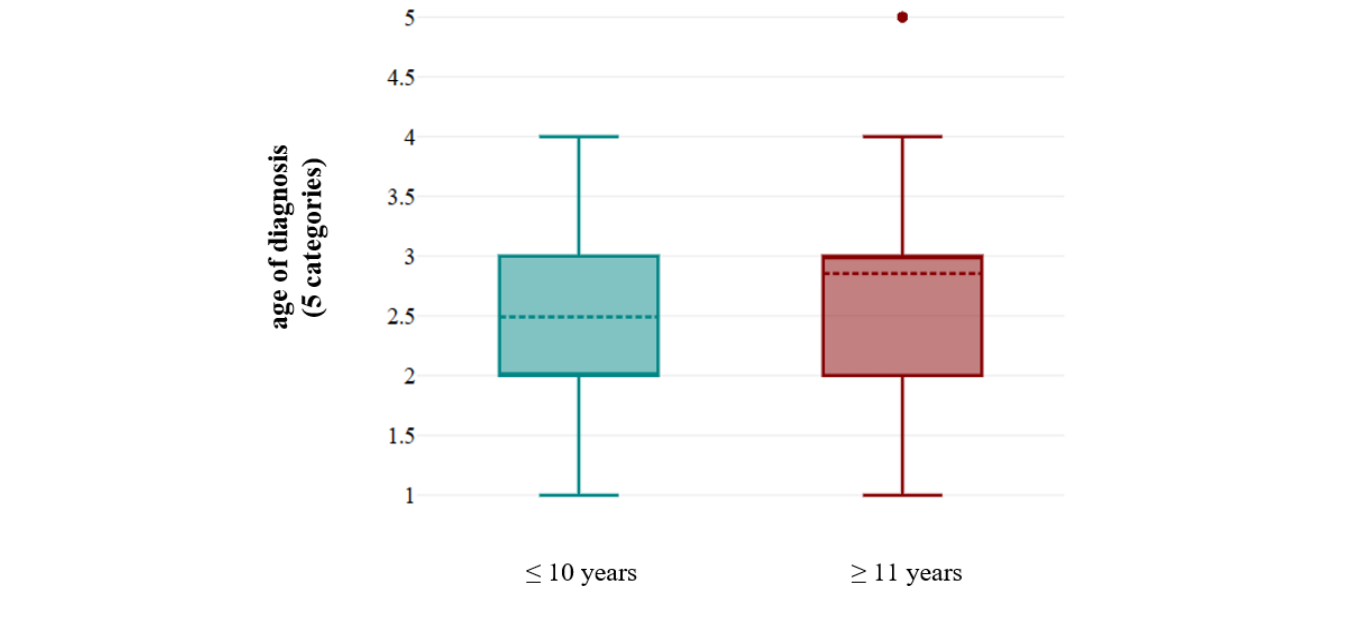
Our sample was of mainly younger age; the median was 10 years. We chose to test this variable since current literature data shows a tendency toward earlier diagnosis of autism in children born in the recent years (or in the last decade). Hence, we divided the participants with ASD into two groups: those currently aged ≤10 years (born in the last decade) and those aged ≥11 years (born earlier). No significant influence of this variable on the age of diagnosis was noted (U=1093; p=0.107) (Mann-Whitney U test) (Figure 3).
Gender
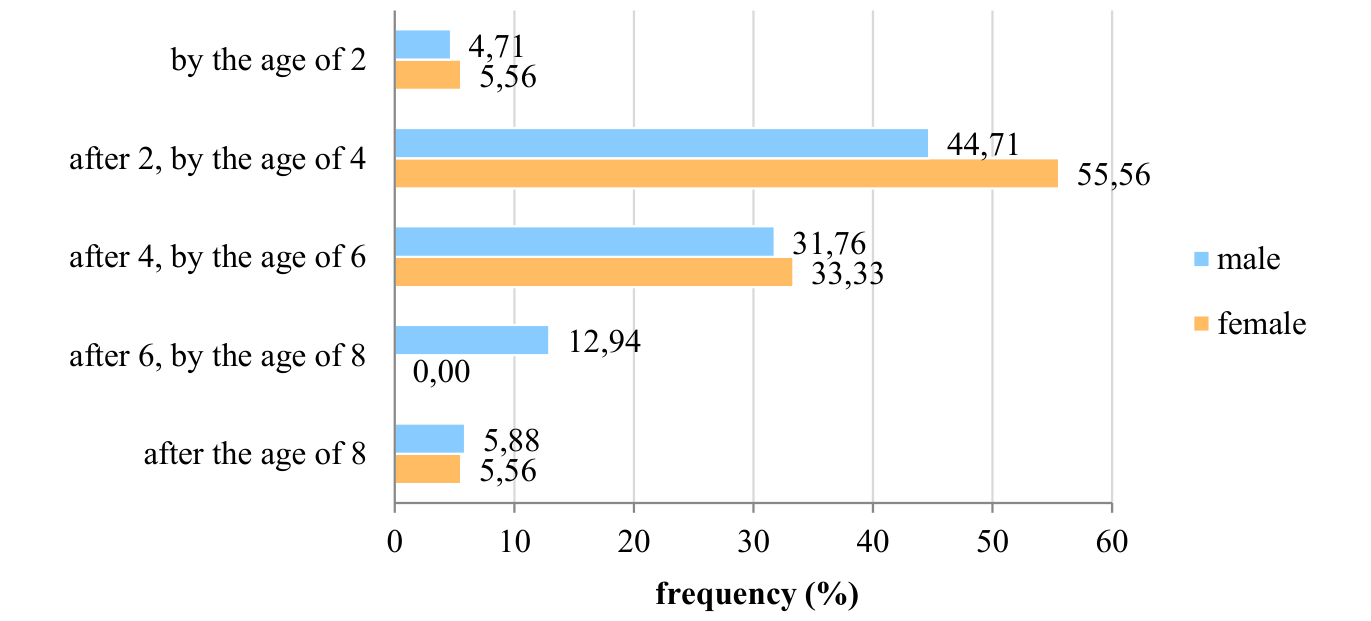
As seen from Figure 4, girls were prevalent in first three groups – those diagnosed earlier (by the age of 6), while boys tend to be present more frequently in the groups diagnosed later – after the age of 6. However, the difference in the age of diagnosis between genders was not statistically significant (U=647.5; p=0.272) (Mann-Whitney U test). Additionally, there was no significant difference in the severity of autism between males and females (U=716.5; p=0.650) (Mann-Whitney U test).
Severity of ASD
Almost half of the sample had moderately severe autism (as rated by the parents). Individuals on the severe side were least presented in our sample (by 16%) (Table 1). No significant association of ASD severity and the age of diagnosis was detected (H(2)=6.750; p=0.150) (Kruskal-Wallis test).
Parental level of education
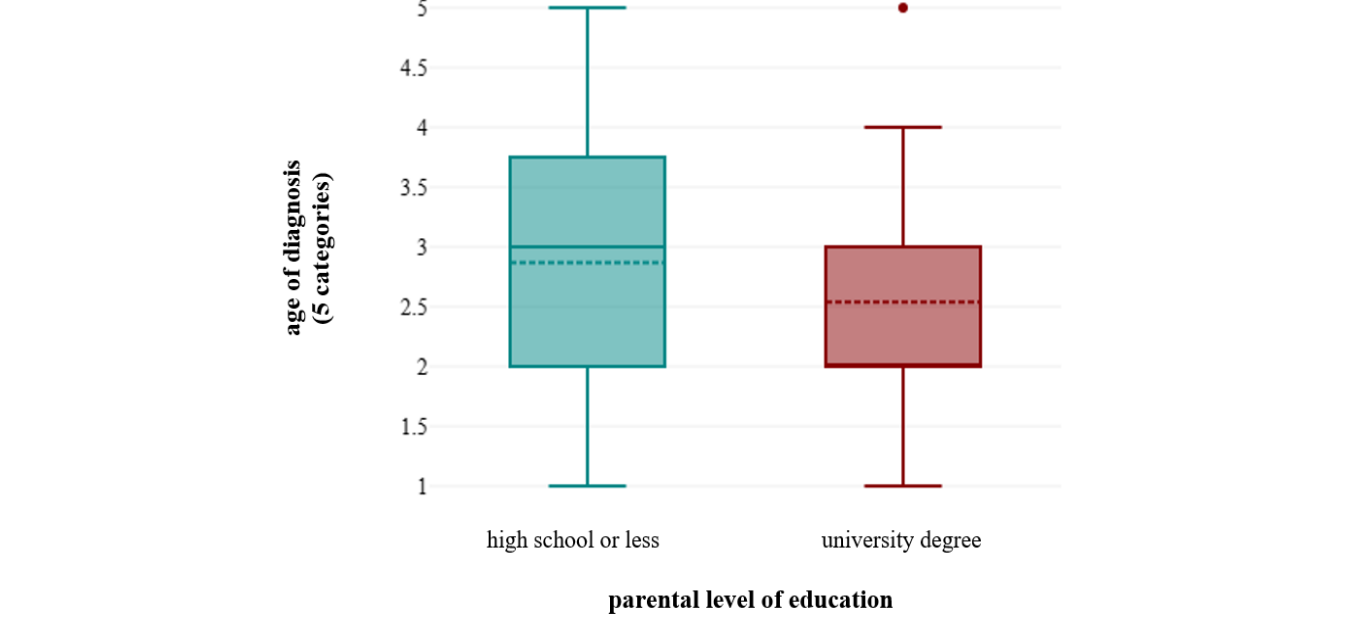
Almost 2/3 of parents in our cohort had a university degree, while the rest had lower education. The Mann-Whitney U test showed no significant association (U=1056.5; p=0.189) of this variable with the age of diagnosis (Figure 5).
Living location of the family
Finally, the fifth tested variable, the living location of the family (rural or urban) also did not significantly affect the age the ASD diagnosis was made (U=468.5; p=0.392) (Mann-Whitney U test).
4. Discussion
This study investigated the age of diagnosis in sample of 103 individuals with autism, the professionals that were responsible for making the diagnosis and several factors (pertaining to the individual or to the parents/families) that might influence the age of diagnosis.
4.1 Professionals diagnosing ASD
Around 40% of individuals with ASD in our sample were diagnosed by a psychiatrist/neuropsychiatrist and almost equally so, sought a second or third opinion and confirmation of the diagnosis, by consulting more than one professional. Pediatricians were the source of diagnosis in less than 3%. Likewise, in Croatia, children with ASD are mainly diagnosed by child and adolescent psychiatrists (Bujas Petkovic et al., 2015). Due to a lack of pediatric psychiatrists, ASD is frequently diagnosed by pediatricians in Bulgaria, where the assessment and diagnosis of autism requires the consensus view of at least two pediatric psychiatrists (Iskrov et al., 2021). Our study’s findings mostly relate to those from the large survey involving 758 caregivers of children with autism from Southeast Europe (Albania, Bulgaria, Croatia and Turkey), which found that autism was mostly diagnosed by psychiatrists (51%), followed by teams of professionals (15%), neurologists (8%), and pediatric specialists (7%) (Daniels et al., 2017).
4.2 Age of ASD diagnosis
Although half of individuals with ASD in our sample were diagnosed by the age of 4 years, a fairy large number (17%) were diagnosed after the age of 6, that is after commencing school. This implies that they have likely missed early intervention and have started school without a proper individual educational plan. Considering the traditional notion that ASD symptoms develop and become evident before the age of 3, it seems that at least half of the participants in our sample were missed to be timely diagnosed and got a delayed diagnosis.
In fact, novel studies suggest that autism can be reliably diagnosed before the age of 3 years.
Most of the ASD diagnoses established in children aged 18 and 24 months (82.6% and 91.8%, respectively) were confirmed at the age of 3 years (Zwaigenbaum et al., 2016). The results from the Pierce et al. (2021) study showed that ASD diagnosis becomes stable even earlier, starting at 14 months of age, with diagnostic stability of 79%, increasing to 83% by the age of 16 months.
Moreover, parents themselves can identify autism symptoms much earlier. A study published in 2022, that also included a cohort from Macedonia found that 60% of parents noticed the autism symptoms by the time their child was 2 years old (to 90% of parents, autism symptoms was evident by the time their child was 3 years old) (Petrusheva & Trajkovski, 2022). The study by Waddington et al. (2022), showed that 62.4% of parents identified atypical development in their child as early as their first year of life.
In like manner, Gibbs et al. (2019) reported delayed diagnosis among children in Australia. The average age at diagnosis was 5 years and despite the early parental concerns (at 23 months of age, on average) and their prompt actions (consulting health professionals around 8 months later), 70% of the children were not identified as having possible autism at the initial professional consultation. Instead, parents were either re-assured that they should not be concerned, advised to “wait and see”, or the child was diagnosed with another condition. This confirms the findings from a survey of Australian diagnosticians, which found that 92% were not confident in identifying autism in children before the age of 3 years and prefer the “watch and wait” approach (Ward et al., 2016).
A large study involving 18 European countries (Salomone et al., 2016) reported a mean age at autism diagnosis of 42.16 months, with large variabilities across countries. The sample from Macedonia in this study was diagnosed at an average age of 39.59 months (approx. 3.3 years). This study, however, did not focus on low- and middle-income Southeast European countries. Nonetheless, comparable results were drawn from a later study that involved only four Southeast European countries – the average age at diagnosis was 40.0 months, while the age at first concern was 24.4 months (Daniels et al., 2017).
In a cohort of parents from Bosnia and Herzegovina, the first concerns regarding their child’s development appeared at a mean age of 17.6 months and it took more than 6 visits to professionals per child and a mean of 16.8 months to get a diagnosis of (any) developmental disorder (Pistoljevic, Dzanko & Ghaziuddin, 2021). This lag from first parental concerns to getting expert opinion and assistance was identified by parents as one of their main worries (Celebic & Memisevic, 2023). On the same note, in a sample from Serbia, first concerns were perceived by parents at a mean age of 22.5 months, while the mean age of ASD diagnosis was 45.8 months (Pejovic-Milovancevic et al., 2018) and in a Macedonian sample, the lag from first symptoms to diagnosis was 2.1 years (Petrusheva & Trajkovski, 2022).
Earlier research has also repeatedly identified the gap, pointing to serious weaknesses in the overall system of community screening and identification of autism (Shattuck et al. 2009). It is more pronounced in communities where neither regular screening nor prospective assessment of children at risk of developmental disorders is available, so the identification of developmental disorders often relies mainly on parents expressing concerns to physicians (Pejovic-Milovancevic et al., 2018).
4.3 Factors affecting the age of ASD diagnosis
Current age
In the latest CDC report on early identification of ASD in the US, a higher cumulative incidence of ASD identification by age 48 months among children aged 4 years compared with children aged 8 years was reported, pointing to improvements in early identification of ASD (Shaw et al., 2023). The meta-analysis conducted by Van’t Hof et al. in 2021, analysed 35 studies published between 2012 and 2019. They reported that the average age at ASD diagnosis was 60.48 months (approx. 5 years) and the subgroup analysis of studies including only children aged ≤ 10 years (those born more recently) showed a much lower mean age at diagnosis – 43.18 months (approx. 3 years, 7 months).
To investigate whether this is also true for our sample, we divided our study’s participants with ASD into two groups: those currently aged 10 years or less and those aged 11 years and older, anticipating a younger average age of diagnosis in the younger group (born in the last decade). We did observe a higher age of diagnosis in the older group and lower in the younger group. Nonetheless, a difference between the two age groups was not found at the level of significance of 0.05. Moreover, this result replicates the finding from another recent study conducted in Macedonian population by Petrusheva and Trajkovski (2022),
who also found no significant difference (p0.05) in the age of diagnosis between children born in the last decade and those born earlier, despite the drop in the mean age at ASD diagnosis from 5.1 to 4.2 years.
Gender
Our study found that the gender is not significantly associated with the age of ASD diagnosis. Gibbs et al. (2019) also found no difference among boys and girls in the age of diagnosis. This may reflect an increasing awareness of the subtle variation in the presentation of ASD in girls. Girls were diagnosed 1.8 months earlier than boys in the Ghahari et al. (2022) study, and conversely, boys got diagnosed earlier than girls in the study conducted by Bonney et al. (2022).
Severity of ASD
Severity did not significantly affect the age ASD was diagnosed in our sample. Although an early diagnosis in the severely affected was anticipated, these individuals were actually not diagnosed earlier than the mildly or moderately affected. This rather unexpected finding could indicate that these individuals might have been initially diagnosed with other developmental or psychiatric disorders, that were recognised as autism at their later age. Minimal difference in the mean age of diagnosis between the mildly (30 months) and the severely affected (28 months) was noted by Long et al. (2022). In general, studies show that earlier ASD diagnosis was associated with severity and predicted by lower cognitive levels, poorer adaptive behavior, lower communication verbal abilities and more severe restricted and repetitive behaviors (Rattaz et al., 2022; Saban-Bezalel, Zachor & Ben-Itzchak, 2022; Salomone et al., 2016).
Parental level of education
We found that, although the age of diagnosis was higher in children whose parents were with lower education and the children of parents with a university degree were diagnosed at a younger age, the influence of the level of education did not reach statistical significance at the 0.05 level. An earlier diagnosis of ASD is usually associated with higher parental education (Ghahari et al., 2021; Hrdlicka et al., 2016).
Living location of the family
Finally, the fifth tested variable, the living location of the family (rural or urban) also did not significantly affect the age the ASD diagnosis was made. Likewise, age of ASD diagnosis was not impacted by the rural/regional living location in a study from Australia (Gibbs et al., 2019). This might suggest equitably accessible (or inaccessible) ASD diagnostic services. Other studies found delays in diagnosis for children living in rural areas (Ghahari et al., 2022; Rattaz et al., 2022).
Study limitations
While our cohort was rather small and based on convenience sampling, some of the findings related to the age of diagnosis are comparable to another recent study also conducted on a (different) sample from Macedonia and referred to earlier in the text (Petrusheva & Trajkovski, 2022).
Thus, our study provides further evidence confirming previous findings. Further, data for the research was provided by parents (including the ASD severity rating), thus the possibility of bias cannot be ruled out.
5. Conclusion
There is a general consensus among the autism research community concerning the worth of early diagnosis, as it opens opportunities for early interventions. Hence, any prospective efforts towards lowering the age of diagnosis should imperatively be accompanied by increased availability and accessibility to appropriate interventions, particularly true for the low- and middle-income countries. Our study shed light on some aspects of the ASD diagnostic process in one of the low-resource countries in Southeast Europe. The findings suggest that despite the probable advancement towards earlier diagnosis in the recent years, no substantial progress seems evident. Nearly 1/5 of the sample was diagnosed rather late ‒ at school age. The tested characteristics pertaining to parents/families and to individuals with ASD did not significantly affect the age of diagnosis. Possible influence of other, external factors (e.g., awareness and vigilance among professionals, availability of early screening programs) is acknowledged and will be regarded in future research.
Conflicts of interests
The authors have no relevant financial or non-financial interests to disclose.
Acknowledgments
This paper was based on research data collected and analysed for the author’s master’s thesis in Intellectual Disabilities and Autism, prepared and defended under the mentorship of Prof. Vladimir Trajkovski at the “Ss. Cyril and Methodius University” in Skopje, Macedonia. We would like to thank all the parents who participated in the research and generously shared information about their children, and the cooperating professionals.
6. References
Bonney, E., Abbo, C., Ogara, C., Villalobos, M. E., & Elison, J. T. (2022). Sex differences in age of diagnosis of autism spectrum disorder: Preliminary evidence from Uganda. Autism research: official journal of the International Society for Autism Research, 15(1), 183–191. https://doi.org/10.1002/aur.2645
Bujas Petkovic, Z., Marsanic, V. B., Divcic, B., & Ercegovic, N. (2015). Late diagnosis of Asperger syndrome in Croatia - a low-income country. PsychiatriaDanubina, 27(4), 426–428.
Celebic, E., & Memisevic, H. (2023). Exploring the Parental Experiences in the Media: A Qualitative Analysis of Articles Written by Parents of Children with Autism in Bosnia and Herzegovina. Journal of Health and Rehabilitation Sciences, 2(1), 1-9. https://doi.org/10.33700/jhrs.2.1.62
Clark, M. L. E., Vinen, S., Barbaro, J., & Dissanayake, C. (2018). School Age Outcomes of Children Diagnosed Early and Later with Autism Spectrum Disorder. Journal of autism and developmental disorders, 48(1), 92–102. https://doi.org/10.1007/s10803-017-3279-x
Daniels, A. M., Como, A., Hergüner, S., Kostadinova, K., Stosic, J., & Shih, A. (2017). Autism in Southeast Europe: A Survey of Caregivers of Children with Autism Spectrum Disorders. Journal of autism and developmental disorders, 47(8), 2314–2325. https://doi.org/10.1007/s10803-017-3145-x
Dawson, G., Rogers, S., Munson, J., Smith, M., Winter, J., Greenson, J., Donaldson, A., & Varley, J. (2010). Randomised, controlled trial of an intervention for toddlers with autism: the Early Start Denver Model. Pediatrics, 125(1), e17–e23. https://doi.org/10.1542/peds.2009-0958
Estes, A., Munson, J., Rogers, S. J., Greenson, J., Winter, J., & Dawson, G. (2015). Long-Term Outcomes of Early Intervention in 6-Year-Old Children with Autism Spectrum Disorder. Journal of the American Academy of Child and Adolescent Psychiatry, 54(7), 580–587. https://doi.org/10.1016/j.jaac.2015.04.005
Gabbay-Dizdar, N., Ilan, M., Meiri, G., Faroy, M., Michaelovski, A., Flusser, H., Menashe, I., Koller, J., Zachor, D. A., & Dinstein, I. (2022). Early diagnosis of autism in the community is associated with marked improvement in social symptoms within 1-2 years. Autism: the international journal of research and practice, 26(6), 1353–1363. https://doi.org/10.1177/13623613211049011
Ghahari, N., Hosseinali, F., Cervantes de Blois, C. L., & Alesheikh, H. (2021). A space-time analysis of disparities in age at diagnosis of autism spectrum disorder: environmental and socioeconomic risk factors. Journal of environmental health science & engineering, 19(2), 1941–1950. https://doi.org/10.1007/s40201-021-00746-2
Ghahari, N., Yousefian, F., Behzadi, S., & Jalilzadeh, A. (2022). Rural-Urban Differences in Age at Autism Diagnosis: A Multiple Model Analysis. Iranian journal of psychiatry, 17(3), 294–303. https://doi.org/10.18502/ijps.v17i3.9729
Gibbs, V., Aldridge, F., Sburlati, E., Chandler, F., Smith, K., & Cheng, L. (2019). Missed opportunities: An investigation of pathways to autism diagnosis in Australia. Research in Autism Spectrum Disorders, 57, 55-62. https://doi.org/10.1016/j.rasd.2018.10.007
Hanley, A., Nguyen, Q. C., Badawi, D. G., Chen, J., Ma, T., & Slopen, N. (2021). The diagnostic odyssey of autism: a cross-sectional study of 3 age cohorts of children from the 2016-2018 National Survey of Children's Health. Child and adolescent psychiatry and mental health, 15(1), 58. https://doi.org/10.1186/s13034-021-00409-y
Hrdlicka, M., Vacova, M., Oslejskova, H., Gondzova, V., Vadlejchova, I., Kocourkova, J., Koutek, J., & Dudova, I. (2016). Age at diagnosis of autism spectrum disorders: is there an association with socioeconomic status and family self-education about autism?. Neuropsychiatric disease and treatment, 12, 1639–1644. https://doi.org/10.2147/NDT.S107239
Hyman, S. L., Levy, S. E., Myers, S. M., & Council on Children with Disabilities, Section on Developmental and Behavioral Pediatrics (2020). Identification, Evaluation, and Management of Children With Autism Spectrum Disorder. Pediatrics, 145(1), e20193447. https://doi.org/10.1542/peds.2019-3447
Ilic, S. B., Nikolic, S. J., Ilic-Stosovic, D. D., & Golubovic, S. S. (2019). Early identification of children with developmental delay and behavioural problems according to parents concerns in the Republic of Serbia. Early Child Development and Care. https://doi.org/10.1080/03004430.2019.1595610
Iskrov, G., Vasilev, G., Mitev, M., Nikolova, R., Stoykova, M., & Stefanov, R. (2021). Practice Patterns for Early Screening and Evaluation for Autism Spectrum Disorder Diagnosis in Bulgaria. Journal of autism and developmental disorders, 51(3), 778–789. https://doi.org/10.1007/s10803-019-04170-2
Johnson, C. P., Myers, S. M., & American Academy of Pediatrics Council on Children with Disabilities (2007). Identification and evaluation of children with autism spectrum disorders. Pediatrics, 120(5), 1183–1215. https://doi.org/10.1542/peds.2007-2361
Lappe, M., Lau, L., Dudovitz, R. N., Nelson, B. B., Karp, E. A., & Kuo, A. A. (2018). The Diagnostic Odyssey of Autism Spectrum Disorder. Pediatrics, 141(Suppl 4), S272–S279. https://doi.org/10.1542/peds.2016-4300C
Long, D., Yang, T., Chen, J., Dai, Y., Chen, L., Jia, F., Wu, L., Hao, Y., Li, L., Zhang, J., Ke, X., Yi, M., Hong, Q., Chen, J., Fang, S., Wang, Y., Wang, Q., Jin, C., & Li, T. (2022). Age of Diagnosis and Demographic Factors Associated with Autism Spectrum Disorders in Chinese Children: A Multi-Center Survey. Neuropsychiatric disease and treatment, 18, 3055–3065. https://doi.org/10.2147/NDT.S374840
McConkey R. (2022). Responding to Autism in Low and Middle Income Countries (LMIC): What to Do and What Not to Do. Brain sciences, 12(11), 1475. https://doi.org/10.3390/brainsci12111475
Montiel-Nava, C., Montenegro, M. C., Ramirez, A. C., Valdez, D., Rosoli, A., Garcia, R., Garrido, G., Cukier, S., Rattazzi, A., & Paula, C. S. (2023). Age of autism diagnosis in Latin American and Caribbean countries. Autism: the international journal of research and practice, 13623613221147345. Advance online publication. https://doi.org/10.1177/13623613221147345
Pejovic-Milovancevic, M., Stankovic, M., Mitkovic-Voncina, M., Rudic, N., Grujicic, R., Herrera, A. S., Stojanovic, A., Nedovic, B., Shih, A., Mandic-Maravic, V., & Daniels, A. (2018). Perceptions on Support, Challenges and Needs among Parents of Children with Autism: the Serbian Experience. PsychiatriaDanubina, 30(Suppl 6), 354–364.
Petrusheva, T. K., & Trajkovski, V. E. (2022). The importance of early diagnosis of autism spectrum disorder for adequate treatment and rehabilitation in Macedonia. Specijalnaedukacijairehabilitacija, 21(3), 163-176. https://doi.org/10.5937/specedreh21-36888
Pierce, K., Gazestani, V., Bacon, E., Courchesne, E., Cheng, A., Barnes, C. C., Nalabolu, S., Cha, D., Arias, S., Lopez, L., Pham, C., Gaines, K., Gyurjyan, G., Cook-Clark, T., & Karins, K. (2021). Get SET Early to Identify and Treatment Refer Autism Spectrum Disorder at 1 Year and Discover Factors That Influence Early Diagnosis. The Journal of pediatrics, 236, 179–188. https://doi.org/10.1016/j.jpeds.2021.04.041
Pistoljevic, N., Dzanko, E., & Ghaziuddin, M. (2021). Practice Patterns and Potential Barriers to Early Diagnosis of Autism in Bosnia and Herzegovina: A Preliminary Study. Journal of autism and developmental disorders, 51(12), 4447–4455. https://doi.org/10.1007/s10803-021-04875-3
Prahbhjot, M., & Singhi, P. (2022). Age at diagnosis for autism spectrum disorders: Does it differ by place of residence? Indian journal of public health, 66(2), 166–170. https://doi.org/10.4103/ijph.ijph_1801_21
Rattaz, C., Loubersac, J., Michelon, C., Geoffray, M. M., Picot, M. C., Munir, K., & Baghdadli, A. (2022). Factors associated with age of diagnosis in children with autism spectrum disorders: Report from a French cohort. Autism: the international journal of research and practice, 26(8), 2108–2116. https://doi.org/10.1177/13623613221077724
Reichow, B., Hume, K., Barton, E. E., & Boyd, B. A. (2018). Early intensive behavioral intervention (EIBI) for young children with autism spectrum disorders (ASD). The Cochrane database of systematic reviews, 5(5), CD009260. https://doi.org/10.1002/14651858.CD009260.pub3
Remington, B., Hastings, R. P., Kovshoff, H., degli Espinosa, F., Jahr, E., Brown, T., Alsford, P., Lemaic, M., & Ward, N. (2007). Early intensive behavioral intervention: outcomes for children with autism and their parents after two years. American journal of mental retardation: AJMR, 112(6), 418–438. https://doi.org/10.1352/0895-8017(2007)112[418:EIBIOF]2.0.CO;2
Saban-Bezalel, R., Zachor, D. A., & Ben-Itzchak, E. (2022). Relationship between cognitive ability and predictors for age at the time of autism spectrum disorder diagnosis. Psychiatry research, 315, 114696. https://doi.org/10.1016/j.psychres.2022.114696
Salomone, E., Charman, T., McConachie, H., & Warreyn, P. (2016). Child's verbal ability and gender are associated with age at diagnosis in a sample of young children with ASD in Europe. Child: care, health and development, 42(1), 141–145. https://doi.org/10.1111/cch.12261
Samadi S. A. (2022). The Challenges of Establishing Healthcare Services in Low- and Middle-Income Countries: The Case of Autism Spectrum Disorders (ASD) in the Kurdistan Region of Iraq-Report from the Field. Brain sciences, 12(11), 1433. https://doi.org/10.3390/brainsci12111433
Shattuck, P. T., Durkin, M., Maenner, M., Newschaffer, C., Mandell, D. S., Wiggins, L., Lee, L. C., Rice, C., Giarelli, E., Kirby, R., Baio, J., Pinto-Martin, J., & Cuniff, C. (2009). Timing of identification among children with an autism spectrum disorder: findings from a population-based surveillance study. Journal of the American Academy of Child and Adolescent Psychiatry, 48(5), 474–483. https://doi.org/10.1097/CHI.0b013e31819b3848
Shaw, K. A., Bilder, D. A., McArthur, D., Williams, A. R., Amoakohene, E., Bakian, A. V., Durkin, M. S., Fitzgerald, R. T., Furnier, S. M., Hughes, M. M., Pas, E. T., Salinas, A., Warren, S., Williams, S., Esler, A., Grzybowski, A., Ladd-Acosta, C. M., Patrick, M., Zahorodny, W., Green, K. K., … Maenner, M. J. (2023). Early Identification of Autism Spectrum Disorder Among Children Aged 4 Years - Autism and Developmental Disabilities Monitoring Network, 11 Sites, United States, 2020. Morbidity and mortality weekly report. Surveillance summaries (Washington, D.C.: 2002), 72(1), 1–15. https://doi.org/10.15585/mmwr.ss7201a1
Siu, A. L., US Preventive Services Task Force (USPSTF), Bibbins-Domingo, K., Grossman, D. C., Baumann, L. C., Davidson, K. W., Ebell, M., García, F. A., Gillman, M., Herzstein, J., Kemper, A. R., Krist, A. H., Kurth, A. E., Owens, D. K., Phillips, W. R., Phipps, M. G., & Pignone, M. P. (2016). Screening for Autism Spectrum Disorder in Young Children: US Preventive Services Task Force Recommendation Statement. JAMA, 315(7), 691–696. https://doi.org/10.1001/jama.2016.0018
Towle, P. O., Patrick, P. A., Ridgard, T., Pham, S., & Marrus, J. (2020). Is Earlier Better? The Relationship between Age When Starting Early Intervention and Outcomes for Children with Autism Spectrum Disorder: A Selective Review. Autism research and treatment, 2020, 7605876. https://doi.org/10.1155/2020/7605876
Trajkovski, V. (2017). Macedonia and Autism. In: Volkmar, F. (ed.) Encyclopedia of Autism Spectrum Disorders. Springer, New York, NY. https://doi.org/10.1007/978-1-4614-6435-8_102172-1
Van't Hof, M., Tisseur, C., van Berckelear-Onnes, I., van Nieuwenhuyzen, A., Daniels, A. M., Deen, M., Hoek, H. W., & Ester, W. A. (2021). Age at autism spectrum disorder diagnosis: A systematic review and meta-analysis from 2012 to 2019. Autism: the international journal of research and practice, 25(4), 862–873. https://doi.org/10.1177/1362361320971107
Waddington, H., Macaskill, E., Whitehouse, A. J. O., Billingham, W., & Alvares, G. A. (2022). Parent-reported atypical development in the first year of life and age of autism diagnosis. Journal of autism and developmental disorders. Advance online publication. https://doi.org/10.1007/s10803-022-05506-1
Ward, S. L., Sullivan, K. A., & Gilmore, L. (2016). Practitioner perceptions of the assessment and diagnosis of autism in Australia. Australian Psychologist, 51(4), 272-279. https://doi.org/10.1111/ap.12211
World Bank. (2023). World Bank Country and Lending Groups. Available at: https://datahelpdesk.worldbank.org/knowledgebase/articles/906519-world-bank-country-and-lending-groups. Accessed: 25 March 2023.
Zwaigenbaum, L., Bauman, M. L., Fein, D., Pierce, K., Buie, T., Davis, P. A., Newschaffer, C., Robins, D. L., Wetherby, A., Choueiri, R., Kasari, C., Stone, W. L., Yirmiya, N., Estes, A., Hansen, R. L., McPartland, J. C., Natowicz, M. R., Carter, A., Granpeesheh, D., Mailloux, Z, … Wagner, S. (2015). Early Screening of Autism Spectrum Disorder: Recommendations for Practice and Research. Pediatrics, 136 Suppl 1(Suppl 1), S41–S59. https://doi.org/10.1542/peds.2014-3667D
Zwaigenbaum, L., Bryson, S. E., Brian, J., Smith, I. M., Roberts, W., Szatmari, P., Roncadin, C., Garon, N., & Vaillancourt, T. (2016). Stability of diagnostic assessment for autism spectrum disorder between 18 and 36 months in a high-risk cohort. Autism research: official journal of the International Society for Autism Research, 9(7), 790–800. https://doi.org/10.1002/aur.1585