
Abstract
Introduction
The period during and after the COVID-19 pandemic was marked by accelerated digitalisation and digital transformation. For most older adults, the use of Information and Communication Technology (ICT) presents numerous challenges and dilemmas, as well as facing hardships and dangers. All of this affects the well-being of older adults. The objective of the study is to examine the impact of ICT use on the well-being of older adults in the (post-)COVID-19 pandemic.
Methods
A qualitative research approach was applied, with data collected through semi-structured, in-depth, individual interviews with 15 older adults aged 65-87 years. We analysed the data collected using qualitative content analysis.
Results
Older adults had different perceptions of the impact of accelerated ICT use on their well-being during and after the COVID-19 pandemic. Some reported positive effects of increased ICT use on their well-being, particularly in maintaining social contacts, building stronger connections with others, and improving communication accessibility during limited in-person contact. They also highlighted greater digital confidence. The increased use of ICT during the pandemic was not universal among older adults.
Conclusion
For older adults who use ICT moderately or regularly, this use maintained or even encouraged their well-being, while for some, it had no effect. The recommendations of older adults constitute an important contribution of the study for decision-makers in the field of digitalization and the well-being of older adults. They also highlighted the need for basic digital literacy programs for older adults, while accounting for the circumstances that affect their well-being.
1. Introduction
The COVID-19 pandemic had a major impact on the lives of individuals, social groups, and society during the 2020-2023 period. We are still facing its consequences today. The pandemic has particularly affected the well-being, quality of life, and social inclusion of vulnerable social groups, including older adults. These are people aged 65 and over. In Slovenia, the share of older adults was 22.4% of the total population of Slovenia on 1 July 2025 (SURS, 2025). This share is expected to continue rising and exceed 30% in Slovenia by 2050 (SURS, 2023), according to EUROPOP2023 demographic projections. Well-being is a multidimensional construct that has been conceptualised in various ways throughout its research development over the last few decades. Diener (1984) highlighted it primarily as the subjective experience of satisfaction and positive emotions, and Ryff (1989) emphasised optimal psychological functioning, such as autonomy, personal growth, and quality relationships. Within the PERMA framework, Seligman (2011) defined well-being through positive emotions, engagement, relationships, meaning, and accomplishment. We used the PERMA well-being model as the theoretical basis for our research. For older adults, the positive emotion of well-being in the PERMA model is particularly associated with maintaining social connectivity, a sense of competence, and meaning in everyday life, whereby access to digital technologies can significantly support or limit these dimensions, especially during periods of social isolation, such as the COVID-19 pandemic (Heo et al., 2015; Seifert et al., 2021). The COVID-19 pandemic and all associated public health measures exacerbated social isolation and loneliness among older adults, which increased the risk of depression, anxiety, and general health outcomes (Lebrasseur et al., 2021; Santini et al., 2020; Smith & Lim, 2020). Cone & Lee (2023) found that the use of ICT correlated with improved emotional well-being, as digital communication provided social and informational support in times of distress. Similarly, Klun et al. (2025) found that Internet use among older adults is associated with better mental health, higher social connectivity, and higher levels of subjective well-being after the COVID-19 pandemic. Among older adults, the use of ICT during COVID-19 showed changes in their engagement in well-being as per the PERMA model, as Sixsmith et al. (2022) determined that a higher proportion of older adults in 2020 reported using digital technologies to combat social isolation, with many of them indicating an intention to continue using them post-pandemic compared to pre-pandemic cohorts. Similarly, Möller and colleagues report that over 50% of respondents increased their engagement with ICT during lockdown, including video calls, messaging apps, and self-tracking devices (Möller et al., 2022). Settels & Bertogg (2025) also found that Internet use during the pandemic significantly contributed to greater digital engagement among older adults and had a protective effect on their well-being, especially among those with a higher degree of social connectivity before the pandemic. ICT has enabled permanent contact with friends and family when physical encounters were limited. This contributed to relationship retention, which is an important dimension of well-being according to the PERMA model. Pre-pandemic evidence shows that Internet use, mobile devices, and video chat applications are effective in helping older adults stay connected and, in some cases, expand their social network (Chen & Schulz, 2016). During the COVID-19 pandemic, Cone and Lee reported that increased communication via ICT was associated with greater perceived social support and reduced feelings of loneliness, as older adults were able to engage in real-time conversations and participate in virtual events (Cone & Lee, 2023). Studies among older adults living alone show that social media platforms served as alternative social channels, reducing loneliness despite physical isolation (Castillo et al., 2022). Even though ICT is excellent for maintaining existing bonds, its effectiveness in establishing new social relations among older adults is less reliable. A cursory overview of Balki and his associates has determined that, while the general use of ICT strengthened existing bonds, the creation of new contacts via technology has not been consistently proven, showcasing that virtual platforms may have a limited capacity for expanding the social networks of older adults outside of their known circles (Balki et al., 2022). Similarly, Iqbal et al. (2025) found that digital engagement significantly supports social participation, interpersonal connectivity, and relations, as well as the well-being of older adults after the COVID-19 pandemic. The COVID-19 pandemic and its numerous restrictions and measures reinforced the importance of meaning as a factor of well-being among older adults within the PERMA model. In the San Francisco Bay Area, Kotwal and his associates found that primary care outreach via brief phone calls or telehealth inquiries was a viable strategy for alleviating loneliness, highlighting the role of technology in maintaining connections when personal visits were limited (Kotwal et al., 2021). Furthermore, Sinha et al. (2021) found that many older adults relied solely on ICT to interact with the outside world, reinforcing its value for maintaining mental health and a sense of inclusion during the lockdown. Newer qualitative studies show that the use of digital technologies among older adults contributes to a sense of meaning, inclusion, and the retention of an active role in everyday life, as it allows for further social participation, independence, and connection with the environment, even after the COVID-19 pandemic (Emmesjö et al., 2025). The benefits of ICT use for well-being and mental health are partly due to reduced loneliness, which we can understand as a well-being outcome within the PERMA model. Chopik (2016) has shown that older adults who frequently use digital technologies reach lower levels of loneliness, which has been associated with better mental and physical health outcomes. Balki et al. (2022) confirmed that the frequent use of ICT strengthens social cohesion, making it easier for older adults to maintain contact and feel supported. Despite the obvious benefits, multiple obstacles have hindered the equitable adoption of ICT. Li et al. (2021) identified these obstacles, including limited prior exposure to technology, a lack of digital literacy, and fear of learning new platforms, which disproportionately affected older adults during the pandemic. Ankuda et al. (2022) highlighted that homebound older adults use email, text messaging, and social media less than their non-homebound peers, which may further widen differences in access to social resources and support. Furthermore, recent studies indicate that a higher degree of digital literacy among older adults significantly contributes to better quality of life, greater independence, and subjective well-being, which supports the accomplishment dimension within the PERMA model (Xin et al., 2025). In our research, we focused on the effects of information and communication technologies (ICT) on the well-being of older adults during the COVID-19 era. Therefore, the main research question that we posited is: "If and how did the accelerated use of ICT during and after the COVID-19 epidemic affect the well-being of older adults?"
2. Materials and methods
2.1. Collection methods and techniques
We based our research on a qualitative research approach, as we obtained the data, views, and opinions of older adults on the impact of ICT use on their well-being through semi-structured, in-depth, and individual interviews in 2024. Participation in the study was voluntary. We conducted interviews in the homes of older adults and ensured the anonymity of all participants. We obtained individual consent for each participant to participate in the study. We used the Beey tool to transcribe audio recordings. Due to the linguistic peculiarities of individual interviewees, we manually checked and corrected the consistency between transcripts and audio recordings. We deleted the audio recordings later.
2.2. Qualitative content analysis
To analyse the collected data, we used qualitative content analysis as described by Hsieh & Shannon (2005), an inductive method for determining categories directly from the data without using predetermined theoretical categories. We based our analysis on repeated readings of the interview transcripts, during which we first identified units of meaning within the text and assigned them initial codes. The open coding process allowed us to identify key concepts and recurring patterns in the data. In the next phase, we compared the codes for similarities and differences and gradually combined them into broader thematic categories. Then, we further examined, defined, and interpreted the categories considering the research question and the study's theoretical framework, as per the PERMA model. Two expert researchers who co-authored this study conducted the coding. Additionally, two other experts who co-authored this study have also examined the codes and the defined thematic categories as second reviewers. To strengthen the credibility of the results, we conducted a member checking process with older adults who participated in the study. We followed a six-phase analysis process for qualitative content analysis, which included: (1) preparing and editing of the materials, (2) determining coding units, (3) open coding, (4) determining and forming of the categories, (5) interpreting and defining of the categories (6), and forming a final theoretical explanation ((Lamut & Macur, 2012; Mesec, 1998; Vogrinc, 2008). We also adhered to the six-stage research analysis framework as defined by Krippendorff (2019), which includes unitising, sampling, coding, reducing, and abductive inferring of the data, and the final narrating of the research outcomes (Im et al., 2023). We conducted the analytical process iteratively, as the individual phases often overlapped and complemented one another on several occasions during the analysis.
2.3. Instrument description
We also present partial results from a three-year complex DIGOLD project in this study. We conducted extensive interviews with older adults using a 45-question checklist developed from a review of relevant literature. We focus on two questions from a larger set of interview questions in this research.
2.4. Sample
The sampling was non-random and purposive. We included 15 older adults aged 65 and over in the study. The average age of interviewees was 74,33 let ± 7,267, with the youngest at 65 and the oldest at 87. We included older adults living in their home environment, in urban and rural Slovenian environments, whether they used ICT or not, and who were regularly involved in various non-governmental organisations and associations. 12 females and 3 males participated in the study. A higher number of women involved can be attributed to more women being active in non-governmental organisations.
2.5. Ethical guidelines
We conducted the research in accordance with the Declaration of Helsinki (WMA, 2024) and the Code of Ethics in Social Welfare (Socialna Zbornica Slovenije, 2014).
3. Results
We present the coding results, the determination of the subcategories, and main categories in detecting the impact of ICT use on the well-being of older adults in Table 1.
Table 1. The coding results, the determination of the subcategories, and main categories in detecting the impact of ICT use on the well-being of older adults
| Main categories | Subcategories | Codes |
|---|---|---|
| The positive effects of ICT use on the well-being of older adults | Maintaining social connectivity | Well-being in social interactions, overcoming loneliness, ICT as a means of connection; ICT as the only channel of social connectivity; ICT use for communication |
| Awareness and information support | ICT as a source of information, the perceived impact due to access to information | |
| Strengthening competency | Improving digital literacy; ICT use capability; peer support for older adults | |
| The absence of perceived impact of ICT uses on the well-being of older adults | The absence of perceived changes in well-being | No detected impact of ICT on well-being; no detected changes |
| Unchanged habits of ICT use | Normal ICT use before the COVID-19 pandemic; no increased ICT use detected; the COVID-19 pandemic did not affect ICT use | |
| Negative or restricting aspects of ICT use on the well-being of older adults | Physical and behavioural consequences | Less exercise; increased fatigue; changed daily routine |
| Resistance and psychological barriers to using ICT | Resistance to ICT use; reluctance; fear of using ICT; lack of motivation; lack of interest | |
| Factors that influence the use of ICT on the well-being of older adults | Age and cognitive limitations | Age as a limitation; dementia as a limitation |
| Digital competences | Lack of knowledge of modern technologies; use of older technologies | |
| Conscious limitation of ICT use | Moderation regarding use; limiting the use of ICT | |
| Safe ICT use | Safe use; recommendations for safe use | |
| The context of the COVID-19 pandemic | Restricted physical contact; adaptation to restricted contact; protective measures as a condition for socialising; relief when restrictions ended; perceived negative impacts of the COVID-19 pandemic |
The results in Table 1 show that we determined 4 main categories and 12 subcategories within the qualitative content analysis framework. The positive impacts of ICT use on the well-being of older adults include maintaining social cohesion, providing information support, and strengthening competence. Several interviewees emphasised that, to maintain social cohesion, it is important to understand the importance of using ICT for communication, social cohesion, and as a means of connecting, since they perceive well-being through social contacts and thus overcome the loneliness of older adults: "... we connected more ..." (Participant 1, female, 66 years) "I'm telling you; this was the only communication for the elderly ..." and "That was a very positive thing, otherwise we weren't allowed to socialise." (Participant 9, female, 78 years) "The phone was at hand, of course, and computer during COVID was actually a positive thing because that was the only thing, because you weren't allowed, to see anyone, not hug anyone, nothing, and that was great, but now we got used to it and you think you just have to call or write something and it's easier now because you can go to the person or tell them more easily or hug them or I don't know." (Participant 15, female, 66 years) "... we met and felt good energy, a certain connection, yes, I liked it." (Participant 1, female, 66 years) The interviewees emphasised the importance of information and information support during and after the COVID-19 pandemic, as ICT represented a source of information and influenced the well-being of older adults due to accessibility to information: "If you wrote a little or anything, it was certainly better, you weren't alone, you weren't on your own, and you learned some new things, some things that were for us." (Participant 15, female, 66 years) " It's true we also had more support, so if something went wrong, you could ask over the phone, 'What do I do now?' especially with these video calls and sessions that we had." (Participant 6, female, 66 years) Several interviewees highlighted the importance of strengthening the competency of older adults, as they perceived an improvement in digital literacy and the ability to use ICT, in some cases also with peer support: "Yes, maybe I got the hang of it more as I could use it more." (Participant 6, female, 66 years) "I still drove the Prostofer, I drove them to testing." (Participant 9, female, 78 years) Some interviewees did not perceive any influence of ICT use on their well-being, as it remained unchanged. Quite a few also stressed that their habits regarding ICT use remained unchanged, as they used ICT just as before the pandemic, and that ICT use did not increase: "Everyone was on the internet, I don't really understand that, but that's how it is, for me personally, nothing has changed for me." (Participant 5, female, 86 years) "Before COVID it was, it was normal, but then we could do more, whether you went or whatever." (Participant 15, female, 66 years) "I don't know, it didn't affect me at all," and "I didn't use my phone more because of it, perhaps I played more games, I'd say that, but that's all." (Participant 5, female, 86 years) Interviewees included physical and behavioural consequences with less exercise, increased fatigue, and changed daily routines among the negative or limiting aspects of ICT use on well-being: "... oh, I'm so tired, as if I just climbed Triglav, and it was like 3, 4 hours computer work, because yes, we all know that there is radiation, everyone warns us against it, but no movement, when sitting, you become very stiff." (Participant 6, female, 66 years) "... that people are different after COVID, relationships, they are impatient, it doesn't matter how old they are, even older ones, everyone is a bit nervous, I mean desperate, wherever you go." (Participant 5, female, 86 years) We also observed some resistance to the use of ICT and psychological barriers, manifested in reticence, fear, lack of motivation, and disinterest: "... fear, or I should say stubbornness, as I said, robots won't get me, will they?" (Participant 2, male, 70 years) "Some people instinctively say, when they see you have a smartphone, throw that box away, and you can explain over and over again how many cool things you found, they won't listen to you at all" and "there are a lot of people like that, because they simply find it repulsive and you can't convince them." (Participant 2, male, 70 years) "Yes, but those who don't use it, it doesn't matter whether it was COVID or not, if they don't use it, they won't use it, no matter what." (Participant 2, male, 70 years) We identified five key influential factors of ICT use on the well-being of older adults. The first factor is age and cognitive limitations, as respondents recognised both age and dementia as limitations: "As we said earlier, an elderly person, someone who is already on the verge of dementia, you have nothing to do with that, it's also a shame to get involved in anything, because they are too old for that to happen." (Participant 2, male, 70 years) The second factor is the development of digital competencies among older adults, as several interviewees believe older adults are unfamiliar with modern technologies and still focus on using older technologies: "... but those who still use landlines today, don't even know how to turn on a smartphone, will stay like that... there are a lot of them, you can't convince them..." (Participant 2, male, 70 years) "... we didn't know a lot of things before, because there are probably more things like Zoom, I don't know, mostly everything via Zoom." (Participant 1, female, 66 years) We recognised the conscious limitation of ICT use as the third influential factor of ICT use on the well-being of older adults, as several interviewees pointed out moderation and limiting ICT use: "But I accepted it nonetheless, but I am careful, I am not exaggerating." (Participant 2, male, 70 years) "We who are capable, I say, use it, enjoy it, just be careful, don't exaggerate." (Participant 2, male, 70 years) The fourth factor we identified was safe use of ICT, which, according to most interviewees, is crucial. Thus, they even formulated recommendations: "Yes, I would only recommend that the elderly become literate, and if possible, use it carefully, only use what they really need, and not dabble with unknown things, because there are many different scams." (Participant 9, female, 78 years) According to a good half of interviewees, the perceived negative impacts of the COVID-19 pandemic, limited physical contact and adaptation to them, protective measures when socialising, and relief when restrictions ended, round off the context of the pandemic as the fifth and final influential factor: "As far as I know, it didn't affect us at all, except being limited by COVID, you couldn't go anywhere, and you were afraid of COVID" (Participant 5, female, 86 years) "Before COVID, it was normal, or we could have done more then, whether you went out or whatever..." (Participant 15, female, 66 years)
4. Discussion
The analysis of the interviews showed diverse experiences older adults had regarding the accelerated use of ICT during and after the COVID-19 pandemic. The analysis of the interviews showed that older adults perceived the use of ICT during and after the COVID-19 pandemic in different ways. Some participants described ICT use as an important source of maintaining social connectivity, accessing information, receiving information support, and developing a sense of competency in their everyday lives. At the same time, others did not perceive significant changes in their well-being, which they attributed to already established habits of using ICT or to the absence of perceivable changes in their everyday functioning. Some participants also highlighted negative or limiting aspects of ICT use, such as physical burdens, behavioural changes, resistance to technology, and various psychological barriers to integration into the digital environment. The analysis of the participants' experiences regarding the impact of ICT use on well-being indicated that they were not perceived uniformly but varied depending on the individual characteristics of the individuals (such as age and cognitive limitations), the level of digital competences, the cognitive limitation of ICT use, safe ICT use, and the broader societal context of the pandemic (Figure 1).
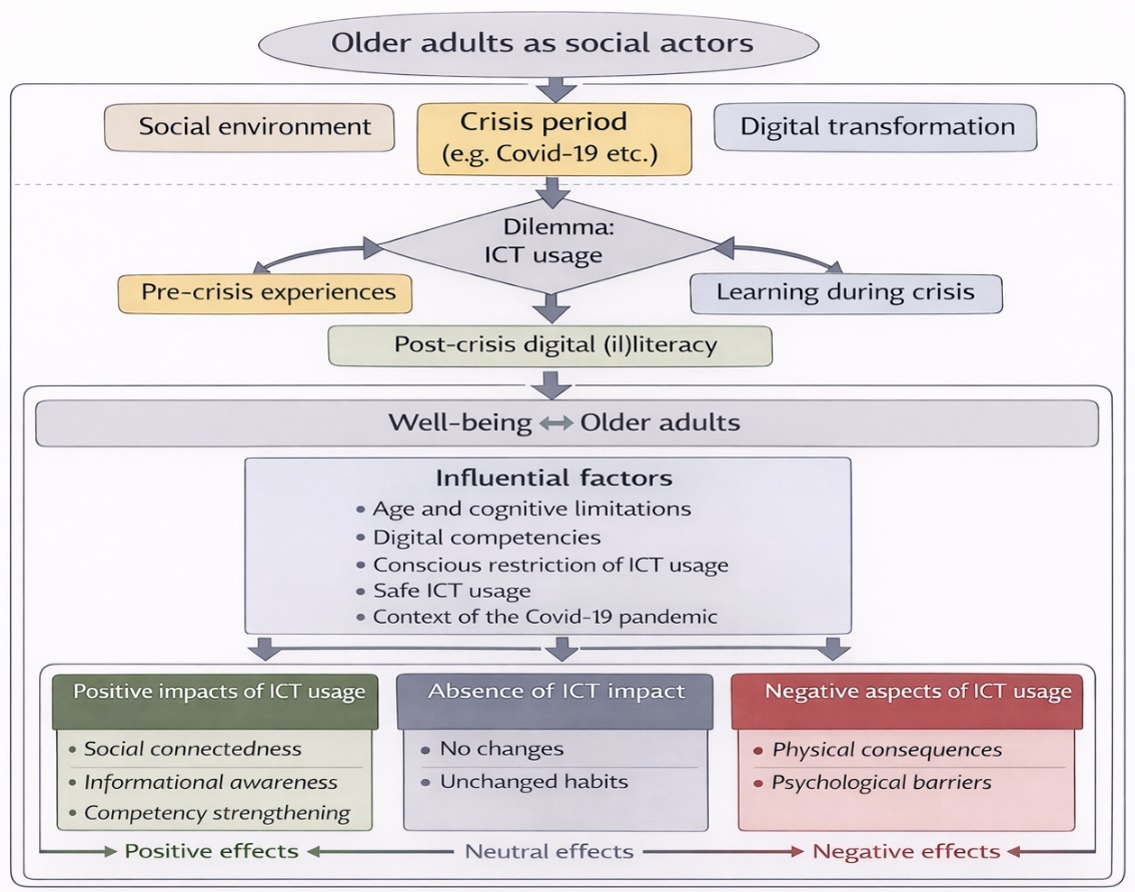
It is prudent to analyse the research findings within the framework of the PERMA well-being model (Seligman, 2011), which provides a multidimensional explanation of an individual's psychological functioning. The analysis of the interviewees showed that older adults perceived digital communication via ICT as an important means of retaining social connectivity and reducing feelings of loneliness during the COVID-19 pandemic. The participants' experiences highlighted the distinct importance of the relationship dimension (R) in the PERMA model (Seligman, 2011), as ICT use served as an alternative means of maintaining interpersonal relationships during periods of restricted physical contact. The participants highlighted peer support as an important factor in ICT use, which, according to their descriptions, contributed to a greater willingness to use digital technologies for communication purposes. The analysis of the results revealed that older adults often understood ICT use as a supporting mechanism for the retention of relationships and a feeling of connectedness, which is consistent with the findings in other studies (Balki et al., 2022; Kotwal et al., 2021; Möller et al., 2022; Seifert et al., 2021). Analysis of the interviews has shown that participants often perceived loneliness in old age as an important aspect of their everyday lives during the COVID-19 pandemic. The experiences of older adults indicated that digital communication via ICT represented an important means of retaining social connections and reducing feelings of loneliness, which the participants associated with an improved sense of well-being and positive emotions within the Positive Emotions dimension of the PERMA model (Castillo et al., 2022; Chopik, 2016; Cone & Lee, 2023; Seligman, 2011; Sixsmith et al., 2022). Older adults also described positive emotions in connection with COVID-19 relief measures, as the restrictions significantly affected the quality of their everyday lives according to their experiences. Their experiences further indicated that access to information through ICT helped reduce feelings of uncertainty and perceived anxiety, as well as contributing to a higher degree of psychological safety. At the same time, some participants described consciously limiting ICT use, which we can interpret as a form of active self-regulation aimed at striking a balance between the benefits of digital technologies and the perceived negative effects of excessive use. The experiences of older adults showed that ICT was an important source of information on measures to address social isolation and on adapting to a changed way of life during and after the COVID-19 pandemic. Participants often described access to information as the factor that contributed to a decrease in feelings of uncertainty and a greater feeling of control over their everyday circumstances during the pandemic. We can interpret such experiences within the context of the Meaning dimension of the PERMA model (Seligman, 2011), as older adults associated ICT use with a sense of greater orientation, inclusion, and meaningfulness in their everyday lives. The analysis of the interviews revealed that the role of digital technologies in shaping perceptions of well-being in crises is linked to access to information, social sources, and other resources, findings supported by other research (Heo et al., 2015; Seifert et al., 2021). The analysis further showed that older adults associated ICT use with greater access to information, which in turn led to greater involvement in daily life and social activities. Participants perceived access to information and digital content as an important factor in Engagement (E) within the PERMA model (Seligman, 2011), as ICT use enabled them to follow current information, to remain active, and to participate in various forms of social engagement, which is a finding also noted by (Ankuda et al. 2022). Analysing the interviews has shown that older adults often perceived the development of digital competencies, digital literacy, and their ability to use ICT as a form of personal progress and greater independence during day-to-day activities. We can analyse such experiences within the Accomplishment dimension (A) of the PERMA model (Seligman, 2011), as participants associated the acquisition of new digital skills with feelings of competence, self-confidence, and greater independence. These results are consistent with those of other studies (Heo et al., 2015; Li et al., 2021; Seifert et al., 2021). Some of the participants also highlighted moderation and the conscious limitation of digital technologies as important aspects of ICT use, which they associated with reduced risks of abuse, overuse, and digital addiction. The PERMA model assumes that greater engagement with the dimensions of positive emotions, engagement, relationships, meaning, and accomplishment contributes to higher well-being (Seligman, 2011). However, our analysis of the interviews showed that some older adults did not associate ICT use with perceived changes in their well-being. The experiences of these participants indicated that ICT use did not significantly affect the individual dimensions of the PERMA model, suggesting that older adults perceive digital technologies differently and that individual context is important when analysing their effects on well-being. The analysis also showed that some older adults perceived ICT use with resistance, reluctance, and fear, which affected their willingness to integrate into the digital environment. Participants' experiences indicated that psychological barriers and low motivation limited their engagement with ICTs and reduced their interest in acquiring new digital skills and competencies. We can interpret such experiences as a limited presence of the Engagement (E) and Accomplishment (A) dimensions of the PERMA model. At the same time, some participants described ICT use as a burdensome or stressful experience, which highlights the diversity of experiences with digital technologies among older adults and partly contradicts research findings that more often associate ICT use with improved well-being and reduced social isolation (Lebrasseur et al., 2021; Santini et al., 2020; Smith & Lim, 2020). Furthermore, the interview analysis revealed that age, cognitive limitations, and perceived digital vulnerability significantly affected older adults' perceptions of ICT use. The participants' experiences suggested that the PERMA model does not fully capture certain socio-gerontological aspects of aging, particularly issues related to cognitive limitations, digital safety, and feelings of vulnerability when using digital technologies. Participants also highlighted the safe use of technologies as an important aspect of ICT use, underscoring the importance of digital safety for the interpretation of well-being among older adults in a digital environment. The analysis of the results showed that the dimensions of the PERMA model provide a good understanding of social, relational, informational, and competence-related aspects of ICT use among older adults, but highlight certain individual characteristics of individuals somewhat less, such as resistance to ICT use, psychological barriers, perceptions of aging, cognitive limitations, and questions of digital safety.
4.1. Limitations of the study
We note the purposefully selected small sample size of participants as a methodological limitation in the qualitative research, which means we cannot generalise the results to the broader population of older adults. The participants' experiences may also have been influenced by potential selection bias and by the retrospective nature of reporting on ICT use during and after the COVID-19 pandemic. For analytical limitations, we must take the interpretative nature of the qualitative content analysis into account, as well as the use of the PERMA model, which did not predetermine the coding. Therefore, not all empirical findings fully fit the model. The content limitations reflect our focus on subjective perceptions and consider emergencies, social distancing, and increased digital dependence in the context of the COVID-19 pandemic.
4.2. Ideas for further research
Further research could include a larger, more representative sample of older adults and the use of various random sampling approaches. It is important to note that varying levels of general and digital literacy, cognitive limitations, and accessibility of participation in research involving ICT use can pose significant challenges when including older adults.
5. Conclusions
The results of the study show that perceptions of increased ICT use during the pandemic were not universal among older adults. Interviewees often expressed that individuals who were not using ICT before the pandemic generally did not start using these technologies even during emergencies. The non-use of ICT was often attributed to personality traits such as resistance, stubbornness, or technology distrust, as well as cognitive limitations and high age, which, according to interviewees, severely limited opportunities for digital inclusion. Most interviewees assessed the possibility of persuading non-users to use ICT more frequently as low. The prevailing opinion among them was that a certain proportion of older adults cannot be effectively encouraged to use digital technologies, regardless of external circumstances or potential benefits. An important contribution to this research is the set of recommendations prepared by the older adults for decision-makers in the field of digitalisation. The interviewees highlighted the need for basic digital literacy among older adults, while emphasising moderate, goal-oriented, and safe use of ICT. They paid special attention to risks associated with digital fraud and the need to protect older users from abuse in the digital environment.
Funding
The project titled "Effects of digitalisation in the (post) COVID-19 era on the quality of life and social inclusion of older adults (DIGOLD)" (J5-4580) in the period 2022--2025 was funded by the Slovenian Research and Innovation Agency.
Acknowledgements
Thanks are due to the members of the DIGOLD project group at Alma Mater Europaea University and Masaryk University Brno, Czech Republic. Thanks, are also due to all 15 older adults who participated in the study.
Conflict of interests
Authors declare no conflict of interest.
References
- Ankuda, C. K and Kotwal, A and Reckrey, J and Harrison, K. L and Ornstein, K. A (2022). The Experience of Homebound Older Adults During the COVID-19 Pandemic. Journal of General Internal Medicine, 37. https://doi.org/10.1007/s11606-021-07361-9
- Balki, E and Hayes, N and Holland, C (2022). Effectiveness of Technology Interventions in Addressing Social Isolation, Connectedness, and Loneliness in Older Adults: Systematic Umbrella Review.
- Castillo, J. M. C and Garcia, L. L and Abalos, E and Locsin, R. C (2022). Living alone and using social media technologies: The experience of Filipino older adults during the COVID-19 pandemic.
- Chen, Y. R. R and Schulz, P. J (2016). The effect of information communication technology interventions on reducing social isolation in the elderly: A systematic review. Journal of Medical Internet Research, 18. https://doi.org/10.2196/jmir.4596
- Chopik, W. J (2016). The Benefits of Social Technology Use Among Older Adults Are Mediated by Reduced Loneliness.
- Cone, N and Lee, J. E (2023). Older adult communication types and emotional well-being outcomes during COVID-19 pandemic.
- Diener, E (1984). Subjective well-being.
- Emmesjö, L and Hallgren, J and Gillsjö, C (2025). Older adults' digital technology experiences: a qualitative study.
- Heo, J and Chun, S and Lee, S and Lee, K. H and Kim, J (2015). Internet Use and Well-Being in Older Adults.
- Hsieh, H. F and Shannon, S. E (2005). Three approaches to qualitative content analysis.
- Im, D and Pyo, J and Lee, H and Jung, H and Ock, M (2023). Qualitative Research in Healthcare: Data Analysis. Journal of Preventive Medicine and Public Health, 56. https://doi.org/10.3961/JPMPH.22.471
- Iqbal, S and Fischl, C and Asai, R (2025). Older Persons' Social Participation, Health and Well-Being Through Digital Engagement.
- Klun, M and Dosedel, T and Seljak, P and Grintal, B and Kavčič, Z. M and Goriup, J and Kavcic, V (2025). How Internet use relates to mental health in older adults: findings from the Czech Republic and the Republic of Slovenia.
- Kotwal, A. A and Holt-Lunstad, J and Newmark, R. L and Cenzer, I and Smith, A. K and Covinsky, K. E and Escueta, D. P and Lee, J. M and Perissinotto, C. M (2021). Social Isolation and Loneliness Among San Francisco Bay Area Older Adults During the COVID-19 Shelter-in-Place Orders. Journal of the American Geriatrics Society, 69. https://doi.org/10.1111/jgs.16865
- Krippendorff, K (2019). Content Analysis: An Introduction to Its Methodology.
- Lamut, U and Macur, M (2012). Metodologija družboslovnega raziskovanja: od zasnove do izvedbe.
- Lebrasseur, A and Fortin-B{'e}dard, N and Lettre, J and Raymond, E and Bussi{`e}res, E. L and Lapierre, N and Faieta, J and Vincent, C and Duchesne, L and Ouellet, M. C and Gagnon, E and Tourigny, A and Lamontagne, M. {`E} and Routhier, F (2021). Impact of the COVID-19 Pandemic on Older Adults: Rapid Review.
- Li, W and Ornstein, K. A and Li, Y and Liu, B (2021). Barriers to learning a new technology to go online among older adults during the COVID-19 pandemic. Journal of the American Geriatrics Society, 69. https://doi.org/10.1111/JGS.17433
- Mesec, B (1998). Uvod v kvalitativno raziskovanje v socialnem delu.
- Möller, J and Bevilacqua, R and Browne, R and Shinada, T and Dacunha, S and Palmier, C and Stara, V and Maranesi, E and Margaritini, A and Takano, E and Kondo, I and Watanabe, S and Ahmadi, M and Wieching, R and Ogawa, T (2022). User Perceptions and Needs Analysis of a Virtual Coach for Active and Healthy Ageing-An International Qualitative Study. International Journal of Environmental Research and Public Health, 19. https://doi.org/10.3390/IJERPH191610341/S1
- Ryff, C. D (1989). Happiness is everything, or is it? Explorations on the meaning of psychological well-being. Journal of Personality and Social Psychology, 57. https://doi.org/10.1037/0022-3514.57.6.1069
- Santini, Z. I and Jose, P. E and York Cornwell, E and Koyanagi, A and Nielsen, L and Hinrichsen, C and Meilstrup, C and Madsen, K. R and Koushede, V (2020). Social disconnectedness, perceived isolation, and symptoms of depression and anxiety among older Americans (NSHAP): a longitudinal mediation analysis.
- Seifert, A and Cotten, S. R and Xie, B (2021). A Double Burden of Exclusion? Digital and Social Exclusion of Older Adults in Times of COVID-19. The Journals of Gerontology: Series B, 76. https://doi.org/10.1093/GERONB/GBAA098
- Seligman, M. E. P (2011). Flourish: A visionary new understanding of happiness and well-being. Free Press. https://psycnet.apa.org/record/2010-25554-000.
- Settels, J and Bertogg, A (2025). Did internet use protect older adults' mental health during the COVID-19 pandemic? It depends on their pre-pandemic social connectedness.
- Sinha, S and Verma, A and Tiwari, P (2021). Technology: Saving and Enriching Life During COVID-19.
- Sixsmith, A and Horst, B. R and Simeonov, D and Mihailidis, A (2022). Older People's Use of Digital Technology During the COVID-19 Pandemic.
- Smith, B. J and Lim, M. H (2020). How the COVID-19 pandemic is focusing attention on loneliness and social isolation.
- Socialna zbornica Slovenije. (2014). Kodeks etičnih načel v socialnem varstvu (PISRS).
- SURS (2023). Projekcije prebivalstva EUROPOP2023 - demografska bilanca in izbrani kazalniki, Slovenija, 2022-2100.
- SURS (2025). Število in sestava prebivalstva.
- Vogrinc, J (2008). Kvalitativno raziskovanje na pedagoškem področju.
- WMA (2024). Declaration of Helsinki: Ethical principles for medical research involving human participants.
- Xin, Y and Weina, H and Yan, D (2025). Digital literacy impacts quality of life among older adults through hierarchical mediating mechanisms.